
Electric Dog Fencing – How Do I Run the Wire?
Installing an electric dog fence is surprisingly simple. With a little planning and a few installation tricks, most homeowners can install their containment fence system themselves in a single afternoon.
How Electric Dog Fence Wire Works
An electric dog fence works by transmitting a radio signal through an insulated boundary wire installed around your property. When your dog approaches this wire while wearing the receiver collar, the collar detects the signal and activates a warning tone followed by a correction if they continue toward the boundary.
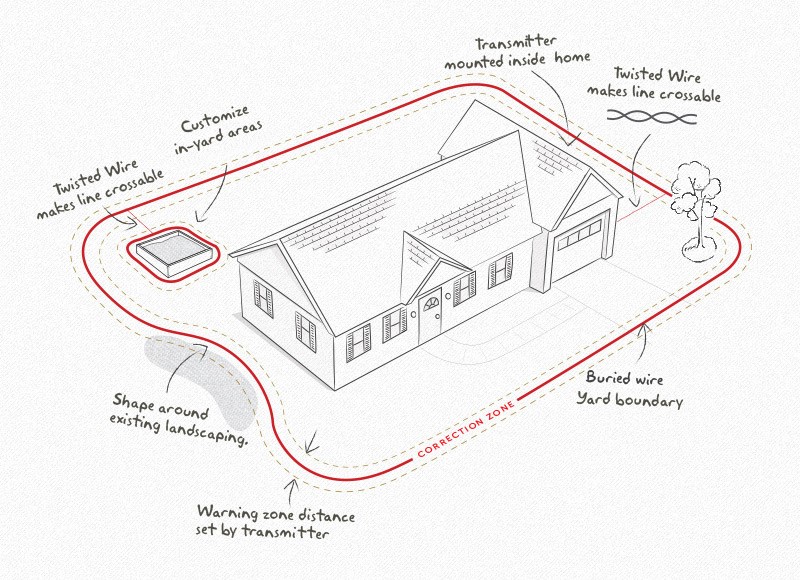
The boundary wire must form a complete loop returning to the transmitter in order for the signal to work correctly.
Step-by-Step Guide to Running Dog Fence Wire
1. Plan Your Fence Layout
Before installing the wire, take time to plan your containment area. Draw a simple map of your property and decide where you want the boundary to run.
Most systems allow flexible layouts, including full yard loops, backyard-only containment areas, or exclusion zones around pools and gardens.
2. Connect the Wire to the Transmitter
The boundary wire begins and ends at the transmitter unit located inside your house, garage or shed. The wire carries the radio signal from the transmitter around your property.
The wire must return to the transmitter to complete the loop and maintain a continuous signal.
3. Attach the Wire to an Existing Fence
If you already have fencing around your property, the simplest installation method is attaching the boundary wire directly to the fence using cable ties or clips.
The boundary wire can be installed at virtually any height on an existing fence. The containment system allows you to adjust the signal field emitted from the wire, so you can control how far away from the fence your dog receives the warning and correction.
By increasing the signal field width, you can create a larger buffer zone that keeps your dog completely away from the fence, helping to prevent digging, jumping, or fence damage.
4. Bury the Wire Underground
The wire can also be buried around the yard if you don't have an existing fence to attach it to, or you can do a combination if the fence is partial or you need to come in off the fence to go around a garden or chook pen.
You can use a round-nose shovel to cut a small slot or incision roughly 10cm deep, rather than digging a large trench.
5. Crossing Driveways or Paths
When crossing a driveway or footpath, the easiest solution is to run the wire through existing expansion joints or gaps in the concrete. In some cases, you may need to make your own cut using an angle grinder.
Once the wire is placed in the joint, you can secure it with silicone or caulking to protect it from damage.
6. Creating Safe Crossing Points
If you need your dog to cross the wire safely in certain areas (for example, between the front and back yard), you can twist the two wires together.
Twisting the wire cancels the radio signal, so the collar will not activate in that section.

Helpful Installation Tips
- Keep wire away from electric livestock fences
- Avoid running the wire directly beside large metal objects
- Use cable clips on wooden fences
- Secure wire carefully where it crosses driveways
- Test the collar before completing the full installation
Testing the Fence System
Once the boundary wire is installed, turn on the transmitter and test the system using the receiver collar.
Move the collar slowly toward the boundary wire. The collar should activate a warning tone before reaching the wire and then deliver a correction if the boundary is crossed.
After confirming the system is working correctly, the final step is training your dog to understand the new boundaries.
Build Your Own Electric Dog Fence System
Modern electric dog fences are reliable, flexible and easy to install. With the right system and proper training, you can safely contain your dog while giving them freedom to move around your yard.
View the Wired Containment Kits


